

Globalization has allowed companies to build diverse teams across different countries and cultures. However, engaging a globally diverse team through a standardized training method can be ineffective.
Localization bridges this gap by adapting training programs to employees’ languages, cultures, and learning preferences. This makes the content more relatable, inclusive, and easier to absorb.
When employees can learn in their own language and context, they feel valued, stay engaged, and perform better. In this blog, we’ll explore how localization improves employee engagement in global training programs.
The Importance of Employee Engagement in Training Programs
Employee engagement plays an essential role in the success of any training program. When employees are actively involved and motivated to learn, they are more likely to retain new information, apply skills effectively, and contribute to the organization’s growth.
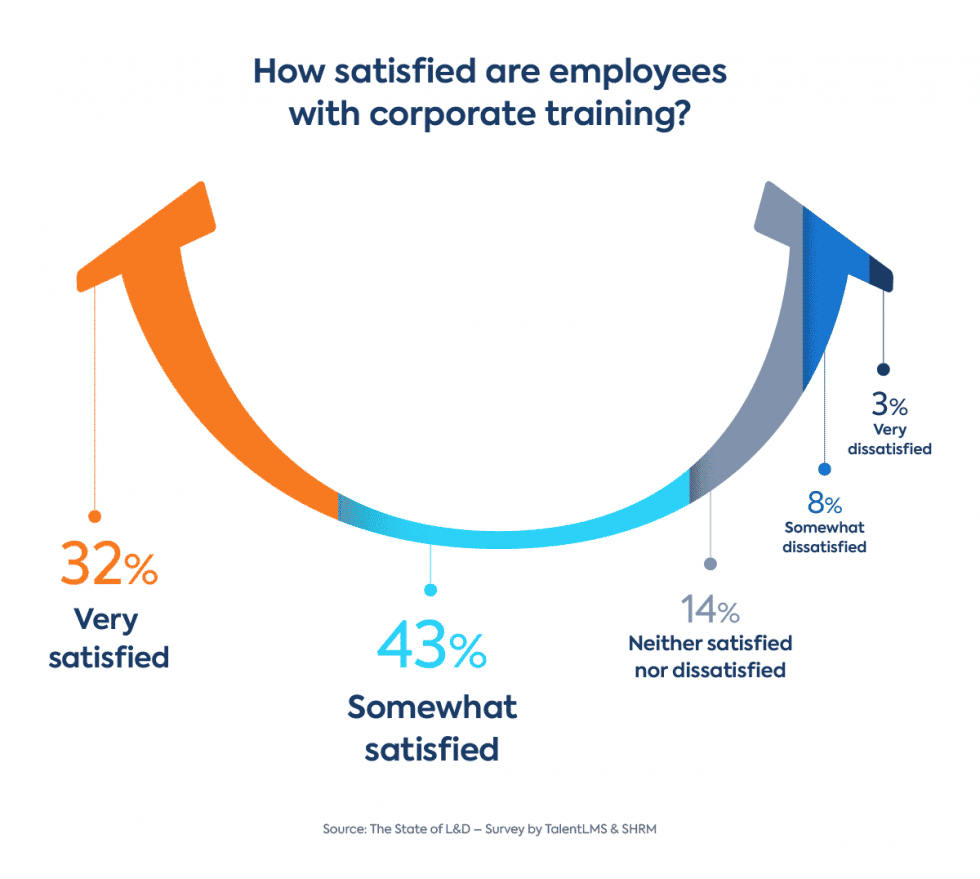
Engaged learners participate enthusiastically, ask questions, and collaborate with peers, turning training sessions into interactive learning experiences rather than passive lectures.
The Limitations of Generic Training
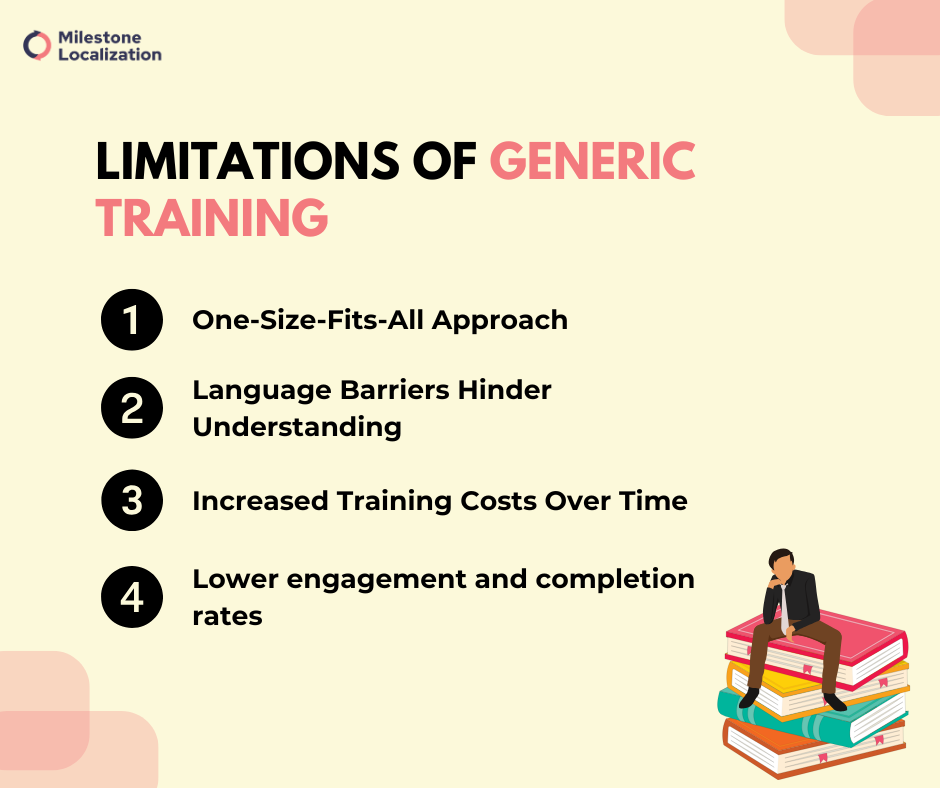
1. One-size-fits-all approach: Using uniform training content without addressing cultural differences or individual learning preferences reduces its relevance and effectiveness.
Studies show that learner-centered, localized training can increase retention by up to 30%. The lack of customization disengages learners, making it harder for them to fully absorb and apply the information.
2. Language barriers hinder understanding: Training materials that are not tailored to employees’ native languages or proficiency levels limit comprehension.
For example, a U.S. food manufacturer, faced challenges training Spanish-speaking laborers until they localized food safety training into Spanish, resulting in a dramatic improvement, with post-training scores averaging 96.6%.
Language barriers can cause important information to be overlooked, reducing learning effectiveness and compromising clear communication.
3. Increased training costs over time: Organizations that do not localize or customize their training often face higher expenses in the long run. These costs arise from repeated sessions, additional support, and corrective measures needed to fill persistent knowledge gaps.
According to Deloitte Insights report, up to 20% of annual training budgets are wasted on re-training and remediation due to ineffective, non-localized programs, ultimately reducing productivity and operational efficiency.
4. Lower engagement and completion rates: Generic training that emphasizes broad concepts over practical, role-specific scenarios and overlooks language and cultural differences can fail to resonate with employees. In fact, 35% of organizations report low participation in training programs. As a result, employees are less likely to stay engaged, actively participate, or complete the training successfully.
What is Elearning Localization?
eLearning localization is the process of adapting digital learning content to align with the language, culture, and learning preferences of a specific audience.
It goes beyond simple translation by modifying text, visuals, graphics, symbols, and design elements to ensure the training feels natural, relevant, and engaging so learners can fully understand and connect with the material as if it were originally created for them.
What are the components of Elearning localization?
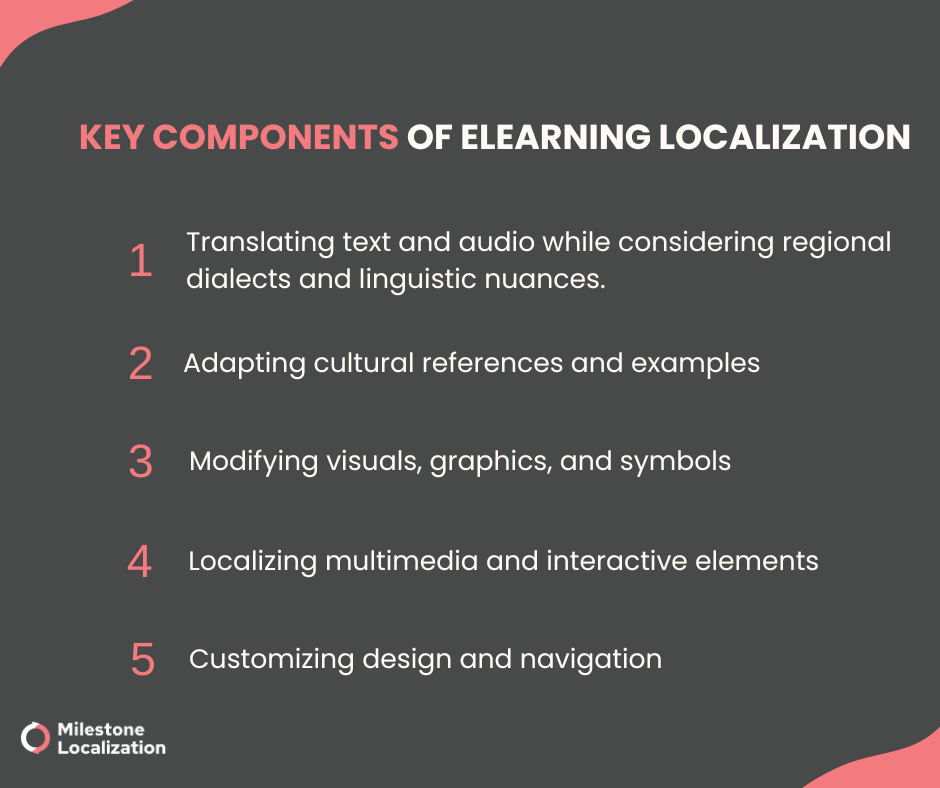
1. Translating text and audio while considering regional dialects and linguistic nuances.
Content is carefully adapted to reflect regional language variations and local terminology. For example, Brazilian Portuguese differs from European Portuguese in pronunciation and vocabulary.
2. Adapting cultural references and examples
Scenarios, analogies, and messaging are tailored to the cultural context of the target audience. For instance, a baseball analogy might be replaced with cricket for learners in India, the UK, or Australia.
3. Modifying visuals, graphics, and symbols
Visuals, icons, and colours are tailored to local cultural meanings and practices. For example, traffic signs vary across countries, and colours may carry different associations.
For example, red can symbolize luck in China but caution or danger in many Western regions.

4. Localizing multimedia and interactive elements
Videos, animations, and interactive components are customized to meet regional preferences. For example, changing text direction for right-to-left languages like Arabic or incorporating local musical styles in background audio.
5. Customizing design and navigation
Layouts, interface elements, and formatting are aligned with local standards. This includes adapting date formats from MM/DD/YYYY to DD/MM/YYYY, changing numerical separators, and adjusting measurement units to match local conventions.
How Localization Improves Employee Engagement

1: Personalized learning experience: By adapting training content to employees’ native languages and culture, learning becomes meaningful and easy to relate to. This personalized approach can boost engagement by up to 43%, helping employees connect concepts to their everyday work and apply new skills more effectively.
2: Better accessibility and inclusivity: Localization removes language and cultural barriers, enabling equitable access to training for all employees. It promotes inclusivity, raising productivity by 28% and supporting a more engaging and collaborative work environment.
3: Higher participation and completion rates: Training programs adapted to different languages and cultural contexts achieve completion rates of 75–85%, driven by content that is clear, relevant, and engaging, which sustains learner interest and consistent participation.
4: Improved knowledge retention: Training materials tailored to employees’ native language helps them understand and retain information more effectively. Localized examples and scenarios make concepts easier to grasp, resulting in stronger long-term learning and better application on the job.
Best Practices for Localizing Global Training Programs
1. Work with native translators: Work with professional translators who are native speakers of the target language to ensure translations are accurate, culturally appropriate, and also convey the intended meaning clearly, ensuring learners fully understand and engage with the training content.
2. Design for text expansion and layout flexibility: Different languages often require more space than the source text. Plan layouts and designs that can accommodate text expansion without affecting readability or visual flow, ensuring the training remains user-friendly.
3. Use a glossary and style guide: Develop a comprehensive glossary and style guide to maintain consistency in terminology, tone, and style across all training content. This helps preserve brand voice and ensures uniformity across regions.
4. Localize multimedia: Ensure that all multimedia elements such as subtitles, voiceovers, images, and infographics are adapted to the target language and regional preferences. This makes the training more engaging, relatable, and easier to understand, enhancing learner comprehension and retention.
5. Test localized courses with regional teams: Pilot test the localized training programs with employees in different regions to gather feedback, identify potential issues, and ensure that the content is relevant, clear, and effective for the intended audience.
6. Partner with ISO-certified agencies: When localizing global training programs, work with translation agencies that have the ISO 9001 (quality management) and ISO 17100 (translation services) certifications.
These certifications ensure the company has standardized processes, works with professional linguists, and delivers consistent, high-quality e-learning content across all languages.
7. Implement quality assurance processes
QA processes, such as proofreading, linguistic validation, and functionality checks, are essential to maintaining content integrity in translation in education. When localizing your training programs, make sure that there is enough time for a final review phase. This phase allows you to catch errors in translation, formatting, or usability before the content goes live.
Conclusion
Localizing your global training programs is an investment in both your employees and your company’s success. Adapting content to their language and cultural context makes learning more engaging, relevant, and easier to absorb.
At the same time, it sends a clear message that you value their diversity and respect their perspectives. Ultimately, localized training not only enhances employee engagement but also engages your teams to perform at their best, creating a motivated, inclusive, and high-performing workforce.
Author Bio
Milestone Localization is a global leader in translation and localization services, offering native-speaker expertise across 70+ languages and over 100 language pairs. With ISO 17100:2015 and ISO 9001:2015 certification, Milestone supports clients in industries such as life sciences, finance, legal, gaming, and e-learning to adapt content, websites, apps and more so it truly resonates with local audiences. Their 1,200+ strong network of linguists, tailored processes and rapid turnaround have earned the trust of 400+ international brands.